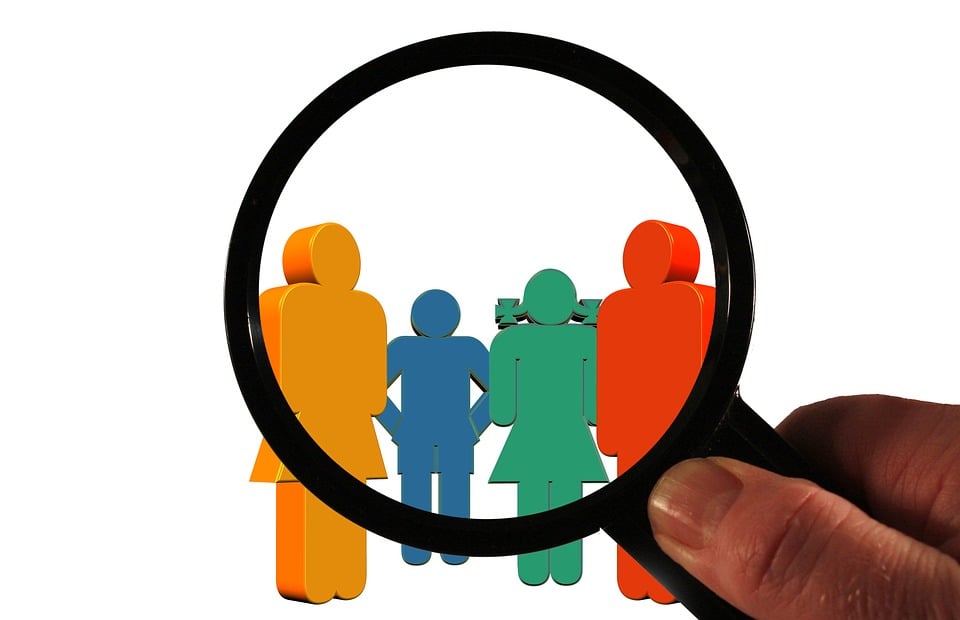


Unlike for-profit businesses that usually have one main target market, maybe two, nonprofits have at least 5 distinct ones. These 5 target market personas need to be clearly identified and embraced. Ideally, you need to get to know them — intimately. You also need to find them on social media networks, get their attention, and build relationships with them.
I’ve worked with several nonprofit organizations (NPOs) in my career. From sitting on boards to setting up their social media to managing their websites, my heart breaks for them as I see them trying, but not succeeding.
Here’s a rundown of the 5 Target Market Personas for Nonprofits:
Like with any business, you need to clearly define your target market personas.

- Donors and Sponsors: These are your main fundraisers. They love your cause and show it by their generosity. They may not have the time to help, so they provide financial support.
- Volunteers: They are the heartbeat of your organization. They are passionate about the cause and show it by giving their time. Furthermore, they come in all levels, from grunt workers to administrators, to team leaders, and organizers.
- Advocates: These people believe in your cause and show it by being ambassadors on social media and raising awareness. They’ll share your content with their friends without thinking twice.
- Clients / Members: The people you serve. If you’re a charitable organization, they are the people you help. If you’re an association, they are your members. Clearly, without clients, you have no reason to exist.
- Board Members: These are the brains of your NPO. They help make major decisions. These are volunteers who have the experience of running their own companies or have C-level or managerial backgrounds. Most importantly, they contribute their knowledge and expertise.
Now, some of these can overlap. Board members can be donors and sponsors. Everyone can be an advocate and everyone can help share on social media.
How can you use Social Media to find these People?
- LinkedIn (B2B): Here you’ll find your nonprofit’s executives, donors, sponsors, board members, and association members. Join and contribute to groups. Post regularly to your personal updates and to the organization’s LinkedIn company profile. Write an “article” (300-500 words) a few times a month to gain exposure. Search for, follow, and connect with people who are actively supporting similar causes and nonprofits.
- YouTube, Instagram, Facebook, Pinterest, and TikTok (B2C): Reach volunteers, advocates, and clients. These media channels are the best way to showcase your organization, what you do, how you help, etc. Therefore, these are great for events and building awareness using visuals.
- X (formerly Twitter): Excellent for getting exposure, building awareness, driving traffic to your website, and search engine optimization (SEO).
- Besides that, the AI answer bots absolutely LOVE to pick up content from the social networks. Especially LinkedIn and YouTube!
Tell Lots of Stories to Get More Reach and Exposure

First and foremost, telling stories is the most powerful tool any non-profit organization has. Undoubtedly, people love tug-at-the-heartstrings and success stories.
User-generated content (UGC) is gold. Encourage volunteers and clients to share stories and events on their social accounts and tag your organization. Watch this Instagram webinar to understand how it works.
A story that tugs at the heartstrings usually gets a lot of reach for nonprofits.
What is social media reach?
Reach is measured by the number of unique people who see your post or ad. Consequently, this is not to be confused with “impressions”. Likewise, impressions are how many total times your post or ad was shown to a user. For instance, if one person sees it 3 times, it’s one reach count, yet. 3 impressions.
What makes stories from nonprofits so special?
They have what’s called “sharability”. Evidently, people love stories and want to share them with their friends. Your reach increases by the number of followers each user has. Much more than that, they entice people to give, volunteer, and/or become an advocate. It all has to do with emotions. People love to cry, care, cheer, even get angry, then do something about it. Related content: What does it mean to go viral?
These stories can be blogs, videos, or image carousels. Obviously, not everything has to be professionally done — just of good quality. Like, watch for typos in the titles and captions. Nevertheless, if you happen to have a volunteer or board member who is a pro at creating graphics and/or videos, let them help as much as they want!
For instance, right now, a big cause that’s gone viral is the Ridglan Farms beagle rescue. One of the many NPOs helping is the Beagle Freedom Project. Personally, I love beagles. Unfortunately, I’m allergic to dogs and can’t own one. Otherwise, I would happily foster one of these adorable pups. Thus, I’m happy to be an advocate and share the videos and reels that they post on Facebook, YouTube, and Instagram.
Because I do so, the algorithm shows me more and more videos that some of the foster moms and dads have taken of the rescued beagles. Now, that’s how you go viral.
It also helps to get the amount of news coverage that they’ve gotten. Don’t be shy. Contact your local media outlets and get some free publicity!
Don’t be Overwhelmed!
Undeniably, you may think this is all very time-consuming, and it is. Albeit, without strategic and tactical marketing plans, you will be overwhelmed. Moreover, I can show you how to use the new AI tools to create social media posts, ads, write articles, and even create reports.
Never lose control of your accounts!
Nonetheless, you must have total control of all your social media accounts. In other words, make sure you have all the account information and passwords. Sometimes, a well-meaning volunteer will start accounts for you. Most importantly, you lose control over what’s posted and miss opportunities. Make sure your top executives and trusted staff have access to your account information.
Likewise, you must educate your current volunteers, advocates, and staff on how to best support your organization on social media.
Naturally, you can easily learn how to structure your nonprofit’s marketing efforts and reach your targets with my 1:1 customized training and coaching.
Start by downloading our free Define Your Target Market Workbook. You’ll need to do one for each of your targets.
Or you can schedule a free 15-minute Zoom consult and brainstorming session!
Related Content:
- What Happens if Our Marketing Efforts Don’t Work?
- What’s Your Conversion Rate?
- Content Marketing in Today’s AI World

Get it on Amazon Kindle
Frequently Asked Questions Regarding Social Media for Nonprofits…
What are the 5 target market personas nonprofits should identify and focus on?
The five target market personas are Donors and Sponsors, Volunteers, Advocates, Clients / Members, and Board Members. Donors and sponsors provide financial support, volunteers give their time, advocates spread awareness on social media, clients or members are the people served by the nonprofit, and board members contribute their experience and leadership.
How can nonprofits use social media to find donors, volunteers, advocates, clients, and board members?
Use platforms like LinkedIn to connect with executives, donors, sponsors, board members, and associations, posting in groups and writing articles periodically. For volunteers, advocates, and clients, use YouTube, Instagram, Facebook, Pinterest, and TikTok. The purpose is to showcase your work and events with compelling visuals and engage with supporters who share similar causes.
Why are storytelling and user-generated content important for nonprofit reach on social media?
Storytelling is the most powerful tool for nonprofits because stories tug at emotions and are highly shareable. User-generated content from volunteers and clients, when tagged to your organization, expands reach and authenticity, helping to attract donations, volunteers, and advocates.
What is the difference between reach and impressions in social media metrics?
Reach measures the number of unique people who see your post or ad, while impressions count how many total times your post or ad was shown. If one person sees it three times, that’s three impressions but one reach.
How can nonprofits maintain control of their social media accounts and involve the right people?
Ensure you have all account information and passwords and that top executives and trusted staff have access. Educate current volunteers, advocates, and staff on how to support the organization on social media to avoid losing control when volunteers help set up accounts.