It’s extremely frustrating when you have what you think is a great website, yet you’re not getting conversions. That is, visitors aren’t staying, they aren’t clicking on your offer, and worse yet, they aren’t buying. Whatever you’re doing to attract and drive visitors to your website is working, but they’re not doing anything once they get there. You’re losing them. Why? Usually, it’s bad copywriting.

Sure, your website copy may sound OK to you, but it’s not selling the visitor. And that is the job of the website! It’s your 24/7 salesperson! Good copy should take the visitor from the headline, through the content, and to the call-to-action (CTA). It should be obvious and easy. Don’t make them work!
The trick is writing for the human reader, but with the search engine and the AI answer bots in mind. What’s nice is that the search engines are focused on the user. Google and the AI bots want fresh, relevant, useful, and quality content written for the human reader in natural language.
How to Think Like the Search Engine in Your Copywriting
It’s hard to think like the search engine when they keep changing their algorithms! Their purpose is to present the searcher with the most relevant, freshest content based on the search term they entered in the search box. Then it tries to think for them as to what other related content they could possibly be interested in. How do they do that?
2 Different Approaches to Search

- E-E-A-T (Experience, Expertise, Authority, and Trustworthiness): This one’s pretty obvious. Who has the most of these qualities? That goes to building trust and credibility. People buy from those they know and trust. This article goes deeper into Google’s E-E-A-T. Then we have the new N-E-E-A-T-T.
- YMYL (Your Money or Your Life) – This sounds like what a mugger might say to you on a dark street, but it’s the type of content that the search engine determines can directly or indirectly impact a searcher’s happiness, health, finances, and well-being.
- Usefulness – Is it helpful? Does it answer the searcher’s question? Does it offer solutions to problems or pain points?
- Quality – Quality content today means it’s written in natural language for a human reader. Obviously, that doesn’t mean you can take the copy from Artificial Intelligence (AI) and use it verbatim. No, you need to edit it so it sounds like a human wrote it, not a computer. Remember you’re talking to your target audience, not another computer. You can’t have an AI tool write your content without giving it a human touch. Here are the Pros and Cons of using AI for writing.
The Search Results Page (SERP)

Where and what comes up here is crucial if you want someone to click through to your website. What they see is the headline of a page, then the meta description outlining what’s on that page. If there is no meta description, the search engine will pull up the first paragraph of text that it finds on the page.
You can have complete control over this. Use it!
Google’s Site Kit is another free plugin for WordPress that will give you stats on how many times you came up in search and how many people clicked on it.
Discovery or Attention Stage
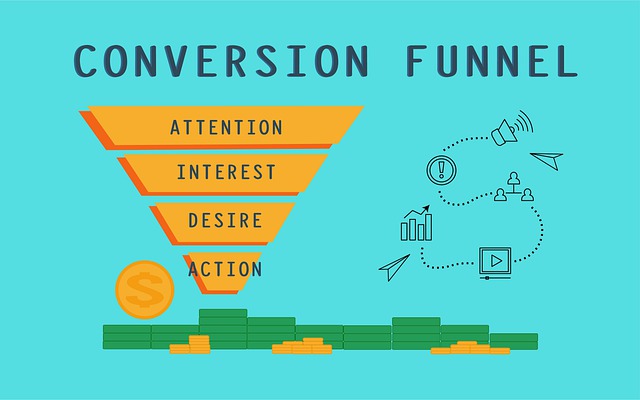
What I’ve outlined above is part of the discovery or the attention stage of a potential consumer’s buying journey. Consequently, what the potential customer does next is solely up to the website copy. You need to walk them through the conversion funnel with your copywriting. Obviously, the goal is “Action”.
The Awareness Level of Your Audience
There are 5 levels of consumer awareness. Also, think of them as buying stages.
- Unaware — They don’t know they have a problem worth solving. At this point, they are asking the AI chatbots something generic. Maybe it’s just curiosity.
- Problem Aware — They sense they have a problem, but don’t know there’s a solution. In today’s AI search, they will be very specific in the question they are asking. They no longer put a keyword and “near me”.
- Solution Aware — They know the results they want but don’t know that you provide them. Here’s where the AI chatbot will nudge them to go deeper in their search. For instance, it will compare products or services. It’ll show features and pricing in an attempt to help the searcher make a choice.
- Product or Service Aware — They know what you sell, but aren’t sure it’s right for them. In this stage, they’re comparing companies or providers. They need a little bit more convincing. Here’s where your trust, authority, and credibility-building pay off. They will look at reviews, your about page, and maybe even your LinkedIn page.
- Most Aware — Repeat buyers, referral sources, and loyal customers who refer you to their friends, colleagues, or customers
This is part of knowing who your target audience is, what their pain points or problems are, and how you are going to solve or alleviate them.
Length alone tells you something. A three-word query (“best running shoes”) is a person at the top of a funnel. A query three times longer (“which stability running shoes work best for overpronation in humid weather with same-day pickup near me”) is a person at the bottom. They have already narrowed, carrying constraints and context the AI gave them. They are not asking “what are my options.” They are asking “where do I do the thing I already decided to do.”
Slobodan (Sani) Manić, No Hacks
You need content on your website that answers their questions, no matter what awareness/buying stage they are in. Here’s where a blog comes in. In addition, having a search box on your website helps, as well as an index of major keywords (tags) and categories, so a visitor can easily dig deeper. In other words, the longer a visitor stays on your website, the more pages he or she views, the higher the chances that they will do something, ie, convert.
Steps to Good, Effective Copywriting
- It starts with the headline. You have 7 seconds, if that, to catch someone’s attention online. That’s true for websites, search engines, and social media. There are AI tools that can help you compose enticing headlines. I can show you how!
- The first paragraph: Next in line is the opening paragraph. Make sure it’s captivating and piques curiosity. Just like your headline should. Moreover, your first paragraph should deliver on what the headline promised. For SEO purposes, your main key phrase should be included in the first paragraph.
- Highlight keywords and sub-headings, use bullet points and lists: People skim over pages. That’s where using bullet points, sub-headings, quotes, and emphasizing major keywords and questions comes in (using bold and italics). They’ll keep reading if they think you’re providing what they need. Using color also works here.
- Write persuasive copy: Use power and action verbs that give direct commands. This is your call to action. What do you want the visitor to do? You have to tell them. For instance, “Visit Website” is a soft suggestion. “Learn More” is a stronger command. Yet, getting specific on the benefits of learning more helps with the AI bots. For instance, “Learn How You Can Save Time” is a more direct call to action. In other words, avoid using vague language. Don’t get overly wordy either. Don’t beat around the bush. Get to the point.
WIIFM
Remember to stand in your target market’s shoes as you’re composing your copy. They are thinking, “What’s In It For Me?” (WIIFM). Are you answering that question? In fact, answer the question briefly, in a few sentences first. Then, go deeper or link to a page where they can get details.
Adapting These Copywriting Strategies to Your Social Media
Your social media pages and profiles should be an extension of your website. Copywriting tips and rules apply here, too! On Facebook and LinkedIn, you have a lot of space in the about sections — use it. On X, Pinterest, and Instagram, your bios are only 160 characters. Think keyword-centric. Again, think of the headline first. That headline is crucial to getting people to click through to the article.
Which AI Tool is Good for Copywriting?
Out of all the AI tools, I like Claude.ai for copywriting. It’s made for writing. I can show you how to use it to write hooks for your social media posts and more!
If you’re not sure what’s working or not working in your marketing, allow me to give you a free analysis!